A rare "spider rain" appeared in Brazil when hundreds of Parawixia bistriata spiders spread their huge webs in the air, creating a scene that seemed to fall from the sky and surprised residents.
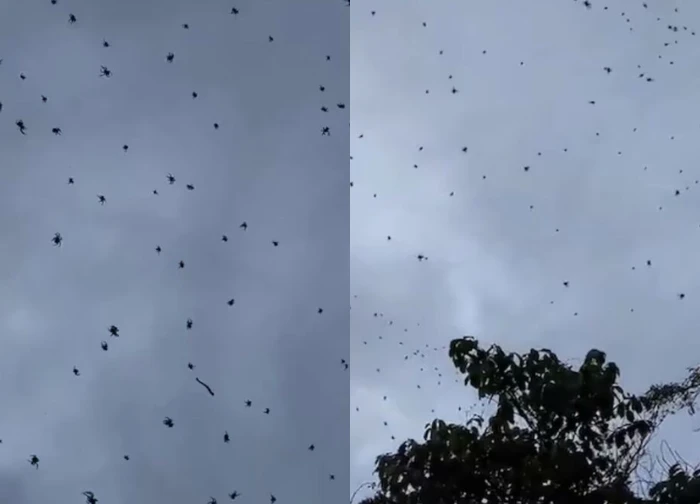
A strange natural phenomenon, known as "spider rain", has recently caught the attention of residents in the small town of São Thomé das Letras, Brazil. This event occurs when the Parawixia bistriata spider spreads an intricate web in the air, creating a spectacle like small creatures falling from the sky.
These giant spider colonies usually appear after hot days combined with fog. They cooperatively spread silk from tree to tree, with each cobweb can contain up to hundreds of spiders. When viewed from a distance, the entire spider web hanging in the air looks like a "living rain" that amazes many people.

Although this phenomenon may be frightening to some, experts insist spiders do not threaten humans. They are not aggressive, their venom is not dangerous, and they play an important role in insect control and maintaining biodiversity.
The image of this giant spider web went viral on social media after environmental activist Bruna Naomi shared it at the end of December 2024. In her confession, Bruna said: "I was driving, and we had to stop to record this scene. This is not the first time they have appeared. Previously, they hid in trees, and cobwebs did not receive much attention.

Every year at this time, they reappear, and seeing them is always a joy for us. "The most impressive thing this year was the way they spread their lives from tree to tree, so far away that we wondered how they could do it."
The phenomenon of "spider rain" also divides residents into many different streams of opinions. Some people suggest removing them, while others associate them with religion, seeing them as spiritual signs. One resident humorously commented: "With so many spiders, mosquitoes will no longer have a chance to bite anyone!"
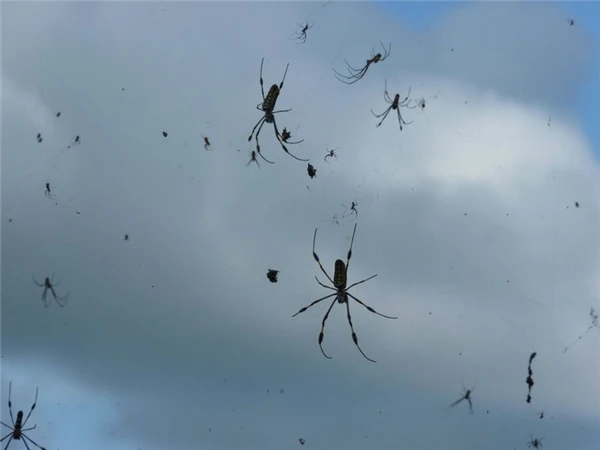
Scientists have explained the causes and meaning of this behavior. Claudio MaurÃcio Vieira, coordinator of the Division of Foot and Joint at the Vital Institute Brazil, said: "Some spiders create such huge webs. They can be used collectively all year round or only at certain times. This is a strategy to hunt large quantities of food or serve breeding."
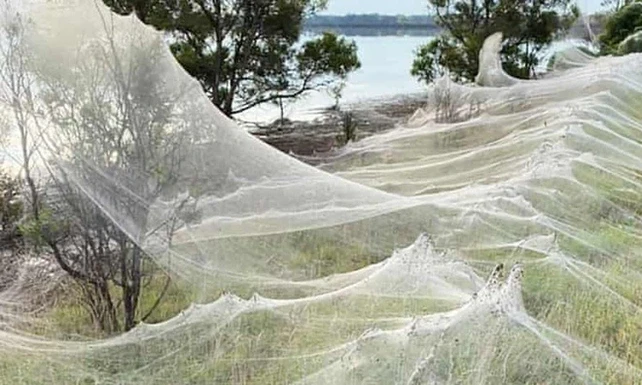
Professor Rodrigo Lopes Ferreira, head of the department of Ecology and Conservation at the Federal University of Lavras, added: "This spider mainly gathers in colonies during the breeding season, which usually takes place from September to March. During the day, they form a 'spider ball', and at night they detach and spread their webs, creating what we call 'spider rain' in the sky."

In terms of safety, Professor Ferreira affirmed: "This spider does not have strong venom. If someone accidentally touches them and causes them to strain, it is possible to be bitten, but the venom is not a cause for concern. They do not belong to the group of spiders with medically dangerous venom."
The phenomenon of "spider rain" not only attracts the curiosity of local people but also surprises the world of scientists and the online community. The image of spider webs stretching across the air, with hundreds of spiders moving in sync, is a vivid testament to nature's incredible collective ability, while reminding humans of the richness and wonder of the world of life around them.
Market Management Station No. 4 Lang Son "urgently" blocked off, curious people surrounded, traffic jam  An Nhiên09:25:10 30/11/2025On the evening of November 29, police forces and many blue-plate vehicles suddenly appeared at Market Management Station No. 4 in Huu Lung Commune (Lang Son), blocking off the area, attracting many people to watch.















 John Titor's prophecy of time travel to an empty party
 The "arid" Atacama Desert suddenly blooms, attracting tourists and photographers worldwide
 Qin Shi Huang and the stone carvings revealing the search for the elixir of immortality
 "Sun Wukong" leads his flock of frightened people down a mountain in China, people are shocked by one thing!
 What is "Ambergris"? Decoding the mystery of the luxury ingredient from the sea
 Flood on Ba River in Dak Lak exceeds historical level, fulfilling the prophecy of Ms. Phuong Hang?
 Revealing the shocking secret of 20 coffins weighing more than 100 tons underground in Saqqara
0 | 0 Discuss | Report