The world's longest and deepest underwater road tunnel is under construction in Norway, with the ambition of reshaping the transport system along the west coast. The project will significantly shorten travel time between major cities.

Upon completion, this tunnel is expected to become a key link in the coastal highway network, contributing to seamless connectivity between regions, boosting economic development, and improving the transport efficiency of the Nordic nation. It is also seen as one of the new symbols of Norway's engineering capabilities and ambitious infrastructure vision.
The project is named Rogfast – short for Rogaland fastforbindelse, after the area where the project is being implemented. This impressive underwater tunnel, stretching 27 km and reaching a maximum depth of approximately 392 m below sea level, is considered one of the most ambitious infrastructure projects in Norway.

The project commenced in January 2018 but was forced to halt at the end of 2019 due to concerns about cost overruns, leading to contract cancellations and a complete restructuring of the plan. Following adjustments, construction officially restarted at the end of 2021 and is now projected for completion in 2033. The total investment is estimated at approximately 25 billion Norwegian kroner (equivalent to 2.4 billion USD), reflecting the scale and complexity of this world-leading underwater infrastructure project.
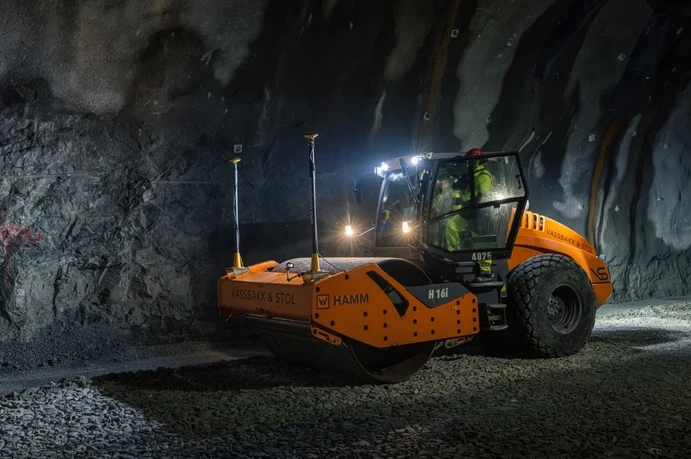
According to the construction company's representatives, the Rogfast project is expected to significantly improve connectivity along Norway's west coast by creating a fast and stable transport route between the two key areas of Stavanger and Haugesund. Notably, the northern section of the tunnel – the deepest and approximately 9 km long – is being undertaken by the Skanska construction group, highlighting the complexity and high technical demands of the project.
Aimed at completely replacing current ferry services, Rogfast will significantly shorten travel time between Bergen and Stavanger – Norway's second and fourth most populous cities, respectively – to around 40 minutes, marking a major step forward in interregional connectivity.
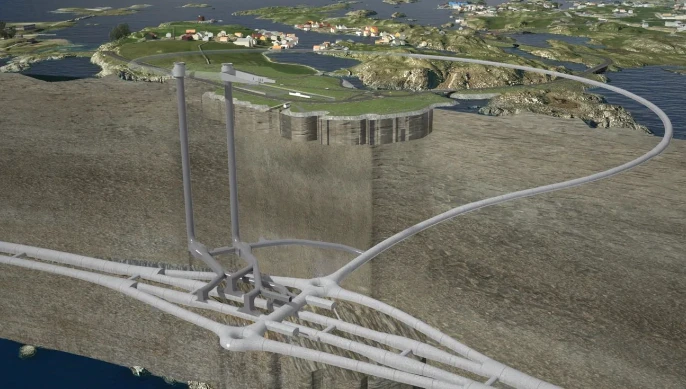
In terms of design, the tunnel consists of two separate tubes, each with two lanes, serving entirely for road traffic. The unique feature lies in the central area, where a double roundabout appears at a depth of approximately 260 meters below sea level, connecting to the tunnel branch leading to Kvitsoy Island – Norway's smallest city. This is considered a unique engineering detail, contributing to the distinctive character of this world-leading underwater infrastructure project.
Constructing a tunnel tens of kilometers long under the seabed presents extremely complex engineering challenges. For the Rogfast project, engineers employed a method of excavating from both ends simultaneously to shorten the construction time, while aiming for the two excavation fronts to "meet" with an error margin of only about 5 cm – an extremely stringent requirement in large-scale infrastructure construction.

To achieve this near-perfect accuracy, the engineering team relied on state-of-the-art measurement systems, most notably advanced laser scanning technology. Rotating laser scanners, combined with reflective mirrors, continuously record the shape of the newly constructed tunnel section, collecting up to 2 million data points per second. From this massive amount of data, a digital replica of the tunnel is reconstructed in real time, allowing engineers to compare it with the original design and quickly detect and correct even the smallest deviations.

The Rogfast project is a key part of the plan to upgrade the E39 coastal highway – a 1,100 km stretch of road running from Trondheim in the north to Kristiansand in the south. Currently, travel along this route takes about 21 hours and relies on up to seven ferries, causing disruptions and limiting connectivity efficiency.
Norway's ambition is to gradually eliminate the ferry system entirely by building a network of modern tunnels and bridges, thereby reducing travel time by half. However, this is a large-scale, long-term plan, not expected to be fully completed until after 2050, reflecting the strategic vision and sustained investment in infrastructure of this Nordic nation.
The An Phu underpass turned into a swimming pool, unexpectedly flooding deeply just half a month after it opened to traffic.  An Huy15:53:36 16/02/2026Having debuted less than half a month ago at one of Saigon's most expensive intersections, the HC1-02 underpass at the An Phu intersection caused drivers a mix of amusement and frustration when it suddenly transformed into an open-air swimming pool on the morning of February 16th.





















 Will the prophecy of the late Russian politician about the Middle East come true before his death?
 The mystery of the 21 coffins in Bao Gong's funeral and his enormous fortune at the end of his life.
 45 planets with the potential to harbor life similar to Earth have been discovered.
 Baba Vanga's prophecy about gold prices in 2026 has been unearthed, and she predicted one thing so accurately that it's hard to believe.
 A "dangerous" type of cancer that progresses rapidly; the first 3 signs should not be ignored.
 The mystery of the world's first man to become pregnant and give birth shocks netizens.
 Discover a new fiery planet with a terrifying temperature of 1,900°C and dense, toxic gases.
 The bizarre story of a 74-year-old woman giving birth to twin girls with her 82-year-old husband and the tragedy behind it.
 Why did concubines chosen by the Emperor for intimacy have to be wrapped in blankets and carried in by attendants?
 The mystery of the strange painting hanging in the Forbidden City was only solved 300 years later.
 The thinnest house in the Mekong Delta, accommodating up to 5 people, with a shocking interior space!
 "Signals of life" detected from another galaxy, 1.7 billion light-years from Earth.
1 | 0 Discuss | Report