The image of the old turtle carrying Tang Monk and his disciples across the Tongtian River is a classic image in "Journey to the West". Surprisingly, giant turtles, capable of carrying people of such overwhelming size, actually existed in the ancient history of Earth!

The 81st Calamity and the Old Turtle's Forgotten Plea
During the arduous journey to obtain Buddhist scriptures, Tang Monk and his disciples had to rely on the help of a giant turtle to cross the Thong Thien River. What was special was that this old turtle had practiced cultivation for 1,300 years but still could not transform into a human form. He told Tripitaka that when he met Buddha, he should ask him: "When will I become a human?"

Unfortunately, when he arrived in the West, Tang Monk forgot this important request. That forgetfulness led to the classic "81st disaster": when he returned and met the Turtle again, out of anger, the Turtle threw all four master and disciples into the river, causing the scriptures to get wet and no longer intact. This detail not only created drama but also raised questions about the origin of this giant creature.
So is the turtle in the story a monster or simply a long-lived creature? The amazing thing is that in real life, a turtle of such extraordinary size has been scientifically confirmed.

Identity Decoded: Stupendemys Turtle - The Real 'Giant Turtle'
The giant turtle in question is not a genetic mutation, but an ancient genus of turtles with the scientific name: Stupendemys geographicus. The name Stupendemys literally means "giant turtle". Unfortunately, they are extinct.

Massive size: Turtle shell fossils have been found showing shell lengths of up to nearly 4 meters. Estimates suggest that their total body length could reach more than 5 meters (thanks to their long necks) and weigh more than 5 tons. With this size, it is entirely possible that Stupendemys could easily carry several people on its back at the same time, similar to the Turtle in the movie.
Period of existence: Their fossils date from the Middle Miocene to the early Pliocene, about 13 to 5 million years ago, mainly found in northern South America (Brazil, Colombia, Venezuela...). Habitat: They usually live in ponds, lakes, or slow-flowing rivers in tropical rainforests, spending most of their time in water and eating plants.

Unique Feature: Mysterious Pair of Horns
Around 8 million years ago in Urumac, Venezuela, paleontologist Rodolfo Sánchez and his team found a nearly complete fossil specimen. The find revealed a never-before-seen feature: long horns.
Notably, this pair of horns only appears in male turtles, not growing on the head but located on the front of the body, on both sides of the neck. This is considered a gender identification characteristic of male Stupendemys species.
Stupendemys turtle shell is incredibly strong, but scientists have found bite marks on the fossil. They can only be from Purussaurus crocodile – a giant prehistoric crocodile with a bite so strong that it could break this protective layer.

Stupendemys geographicus still holds the record for being the largest turtle ever found. Its closest living relative is Podocnemis expansa (the Large Amazon River Turtle), but this species is only about 1 meter long and weighs an average of 90 kg, much smaller than its giant ancestors.
Although the Old Turtle in "Journey to the West" is a fictional character, the discovery of Stupendemys geographicus suggests that Wu Cheng'en's imagination may have been inspired by legends, or even faint traces of an ancient monster that once roamed the Earth!
Jack suddenly reappeared after the ban, strange attitude, did something that shocked everyone?  An Huy07:46:44 13/11/2025After a period of silence and a 9-month suspension from performing due to a scandal related to a controversial song, singer Jack has returned with an unexpected action.





















 The truth behind the strange light streak in Da Nang that caused a stir throughout Central Vietnam: a shocking revelation!
 The mystery of the "dragon head" plot of land in Seoul: The Samsung family has lived there for many years without moving.
 The Orion spacecraft returned safely to Earth, marking a new milestone: 10 days orbiting the Moon.
 The "superpower" of Vietnamese Zen masters, revealing the classic mysteries that are well hidden
 The 800 billion toilet on Artemis II malfunctioned in the middle of the journey, unable to go heavily
 Photo of "Earth sinking" from the Moon takes the internet by storm, NASA reveals an unprecedented perspective
 The mystery of an ancient Chinese village with feng shui architecture, fireproof?
 The "water monster" suddenly rises to the surface of the water, and immediately 'attacks' tourists rowing boats?
 The "chilling truth" if giving birth in space can have "horrifying" consequences?
 Greek skies suddenly 'overcast' the day before Easter, suspected 'miracles' happened?
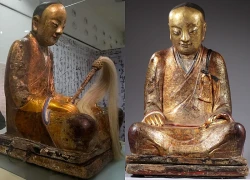 The secret inside the 1,000-year-old Buddha statue contains something that everyone who hears it is afraid of blushing
 The sky of April - May: The grand feast of the light of the Moon, "a few years are once"
2 | 0 Discuss | Report