The Artemis II mission captures the rare moment when the Earth gradually disappears behind the lunar horizon. The iconic image is reminiscent of "Earthrise", and at the same time marks a new step for humanity.
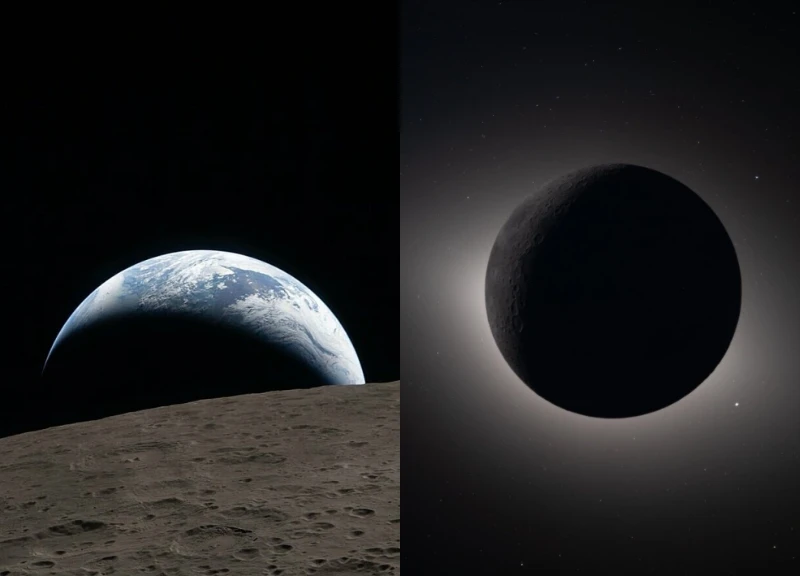
The Artemis II mission continues to make history as astronauts capture a rare moment: the Earth gradually disappears behind the Moon's horizon – a phenomenon often referred to as the "Earth sinking". The photo was taken during the return journey on April 7, after a flight around Earth's natural satellite, according to information from AFP.
NASA has released images showing the tiny blue planet slowly disappearing behind the rugged edge of the Moon. This iconic scene is seen as a modern tribute to the famous "Earthrise" photo taken by astronaut Bill Anders during the Apollo 8 mission in 1968.
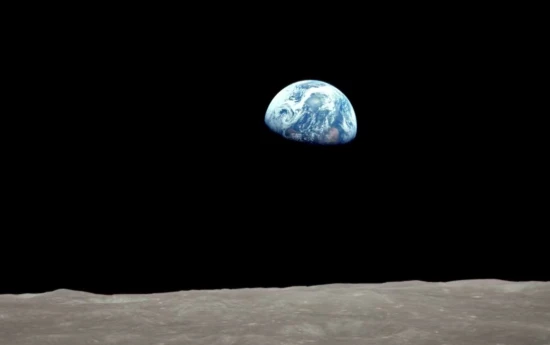
57 years ago, "Earthrise" profoundly changed the way humans viewed the Earth, when they first saw their planet from distant space. The new edition from Artemis II further emphasizes the stark contrast between the life-filled blue Earth and the harsh, desolate surface of the Moon, all separated by the deep black void of space.
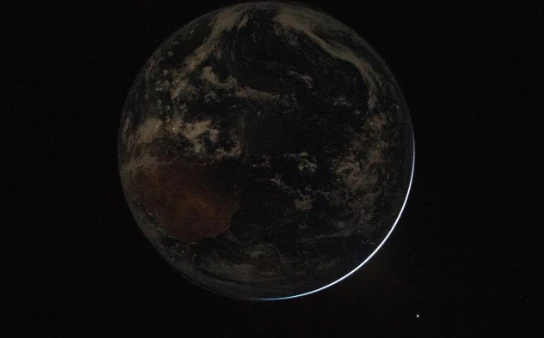
According to a statement from the White House, "This is the first photograph taken from the far side of the moon," marking a new step forward in observing space from unprecedented perspectives.
The Artemis II crew consisted of mission commander Reid Wiseman, astronaut Victor Glover, mission specialist Christina Koch and Jeremy Hansen from Canada. They completed a flight around the Moon as part of the Artemis program, which aims to return humans to the Moon in 2028.
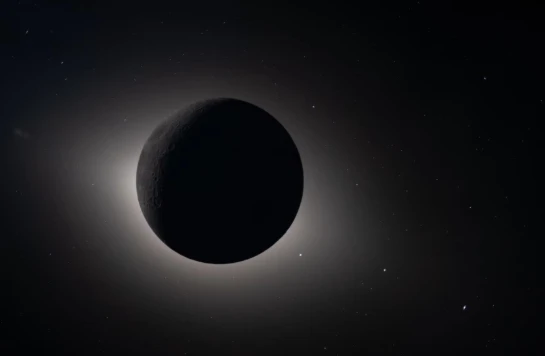
After completing its historic journey, Orion is now on its way back to Earth and is scheduled to land in the Pacific Ocean off the coast of California. Notably, the mission set a new record for reaching the farthest distance from Earth, reaching 406,771 km, surpassing Apollo 13's achievement by more than 6,000 km.
During the trip, astronauts had the opportunity to observe the lunar surface in detail, witness eclipses, and even see flashes of light caused by meteorite collisions. Sharing about this special experience, astronaut Victor Glover said: "Maybe humans haven't evolved to see what we're seeing. It's hard to describe, it's magical."
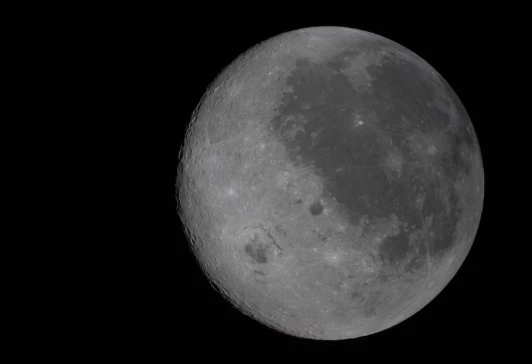
Not only has scientific significance, Artemis II is also considered a symbol of diversity in the field of space, according to the South China Morning Post. In which, Victor Glover became the first person of color to fly around the Moon, Christina Koch was the first woman to make this journey, and Jeremy Hansen was the first non-American astronaut to participate in such a mission.
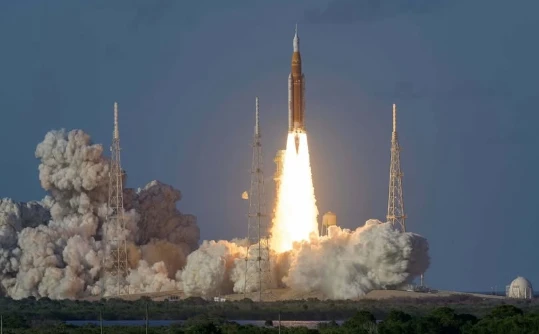
The crew also received congratulatory calls from NASA Director and US President Donald Trump. Trump praised them as "modern-day pioneers" with "extraordinary courage," noting the team's effort and spirit of discovery.
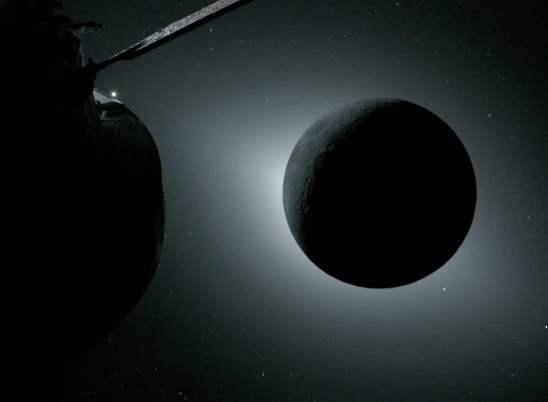
Before leaving lunar orbit, astronauts also proposed naming two craters that have not yet been named. One of them was proposed to be named "Carroll", after the late wife of Commander Reid Wiseman. Sharing emotionally, Jeremy Hansen said: "It's a bright spot on the moon, and we like to call it Carroll." According to NASA, these proposals will be submitted to the International Astronomical Union for formal review and approval.
The "chilling truth" if giving birth in space can have "horrifying" consequences?  Thanh Yên23:06:04 05/04/2026A new scientific report warns that space pregnancy poses many risks due to radiation, microgravity and biological disorders, posing a major challenge to the future of human reproduction.
















 The mystery of an ancient Chinese village with feng shui architecture, fireproof?
 The "water monster" suddenly rises to the surface of the water, and immediately 'attacks' tourists rowing boats?
 Greek skies suddenly 'overcast' the day before Easter, suspected 'miracles' happened?
 The secret inside the 1,000-year-old Buddha statue contains something that everyone who hears it is afraid of blushing
 The ancient Persian prophecy of Khamenei's destruction came true?
 The sky in Australia glowed red like 'the end of the world', experts say it's chilling?
 Son Doong Cave unexpectedly becomes a focal point, appearing on American television and attracting international tourists.
 Rare occurrence: First baby born in 17 years in a South Korean village, villagers overjoyed.
 Chinese Nostradamus prophet predicts US defeat in Iran, revealing a shocking future.
 Baba Vanga prophesied about the fluctuations in gasoline prices, a coincidence that is chilling!
 Baba Vanga prophesied the 'End of the World', and global experts warn that day is near?
0 | 0 Discuss | Report