Just in time for Halloween , NASA captured an image of the Sun appearing like a giant, smiling pumpkin face. But behind that "ghostly smile" is a coronal hole that is sending high-speed winds toward Earth, which could cause geomagnetic storms.
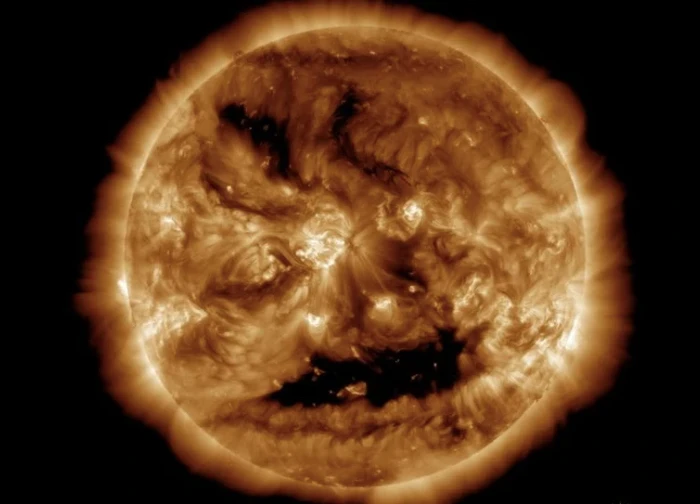
On October 28, NASA's Solar Dynamics Observatory (SDO) captured a strange image: the surface of the Sun appeared a "ghostly smile" just in time for Halloween. Bright active regions and dark coronal holes combined to create an image that resembled a pumpkin face, with glowing eyes, a small nose and a mischievous curved smile. The image quickly spread on social networks, likened to a giant jack-o'-lantern "looking down" at Earth.
The “smile†in the photo isn’t just a random image, however. According to NASA, it’s a large coronal hole – an area where the Sun’s magnetic field opens up, allowing charged particles (solar wind) to escape into space. This wind is heading toward Earth and could trigger a small to moderate geomagnetic storm between October 28 and 29. This is a common occurrence during the Sun’s activity cycle, but its Halloween-like timing makes it particularly noteworthy.

A geomagnetic storm is a natural phenomenon that occurs when charged particles from the Sun collide with the Earth's magnetosphere, causing fluctuations in the planet's magnetic field. Depending on the intensity, a geomagnetic storm can have significant impacts on modern technological systems. Experts warn that if this solar wind is stronger than expected, it could disrupt satellite operations, interfere with GPS signals, affect radio communications and even cause localized power outages in some areas.
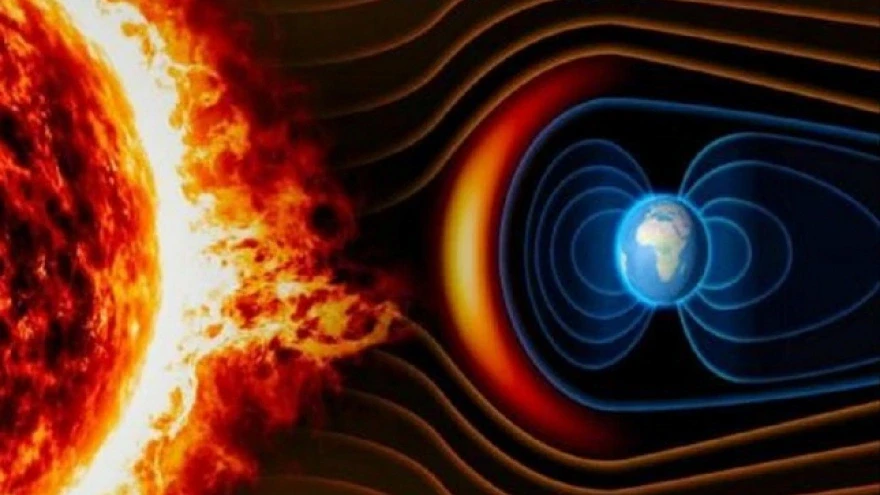
In contrast, the aurora borealis – the “beautiful side†of geomagnetic storms – can appear more spectacular than usual. Auroras are usually only seen near the North and South Poles, but during strong geomagnetic storms, the aurora borealis can extend to lower latitudes, creating colorful light shows in the night sky. They are the result of the interaction of solar winds with gas molecules in the Earth’s atmosphere, creating dazzling, moving bands of light.

This is not the first time SDO has recorded a "face" phenomenon on the Sun. In 2014, the observatory also captured a similar image, with bright and dark areas forming a smiley face. SDO is one of NASA's important projects, operating since 2010 with the mission of continuously monitoring the Sun.
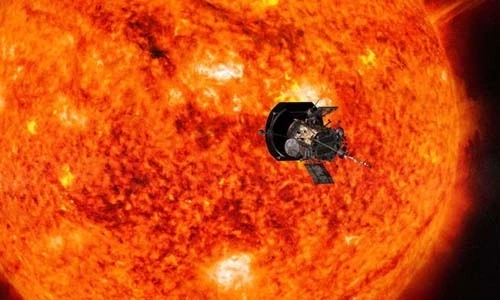
The spacecraft takes high-resolution images of the Sun, helping scientists study how the Sun's magnetic energy affects space weather – an increasingly important factor in the modern technological age, when humans rely heavily on satellites and electronic systems.
Exactly 22 years ago, on Halloween 2003, Earth experienced one of the most powerful solar storms ever recorded. The violent eruptions created brilliant auroras across the sky and caused severe disruption to satellites and power grids around the globe. The event became known as the “ Halloween Storm †and is still cited as a prime example of how space weather can impact human life. Scientists are still working to better understand how to predict and respond to such events in the future.
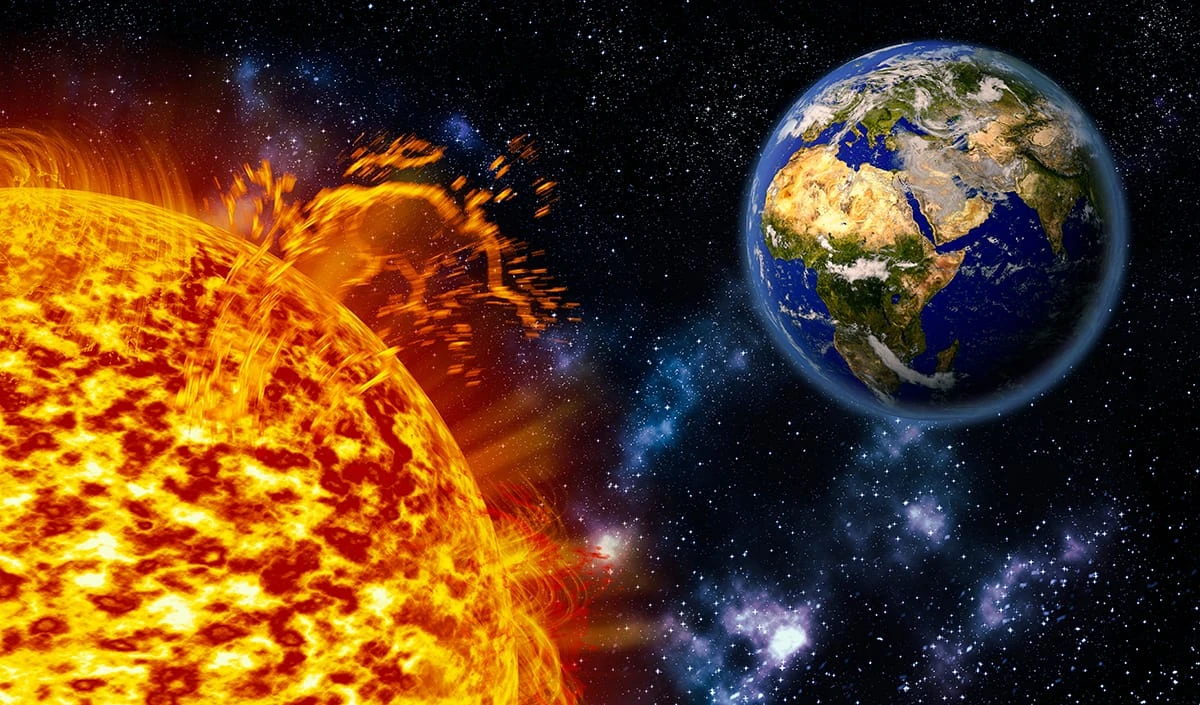
This image of the Sun's "ghostly smile" is not only visually impressive but also a reminder of the power of nature. Although seemingly friendly, fluctuations from the central star of the solar system are always closely monitored by scientists, because even small changes can create big impacts on our blue planet. In the context of the Sun entering a highly active phase of its 11-year cycle, phenomena such as coronal holes, geomagnetic storms or auroras will appear more frequently. Monitoring and accurately predicting these fluctuations not only helps protect modern technological systems but also opens up opportunities to explore more deeply the connection between the universe and Earth.
Parker probe "touches" the Sun: Breaking records and revealing the mystery of the corona. 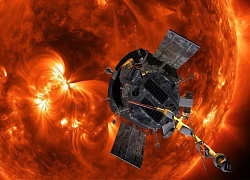 Khanh Phạm16:45:05 23/12/2024NASA's Parker Solar Probe will make the closest flyby of the Sun in history. It will approach the Sun at a distance of 6.1 million kilometers and will continue to explore the mysteries of the solar corona and cosmic phenomena that affect Earth.











 Nostradamus and the 2026 Curse: The Truth You Need to Know, Don't Be Misled!
 A dragon's eye unexpectedly appeared amidst a 1,000-year-old rocky mountain, leaving netizens stunned upon arrival.
 China's Most Stingiest Emperor: His Tomb Reveals a Surprising Secret
 Veronika the Super Cow: A Slap in the Face of Prejudice, Knows How to Scratch an Itch with a Branch Like a Human
 The truth about the concubine who was favored by the Emperor but couldn't walk on her own is a subject of debate.
 Mysterious 'submarine' revealed beneath the White House, a secret kept by generations of US presidents?
 The highly toxic cinnabar found in an ancient Scythian tomb reveals a 2,000-year-old secret.
 Indian prophet Abhigya Anand reappears, warning of a major event in China.
 The world's largest iceberg, A-23a, is on the verge of melting, posing a "red alert" for Earth.
 The planet has a massive diamond mine 15km thick, and it takes 5 hours to travel there.
 Unusual situation in Malaysia: Husband openly marries best friend as his second wife, first wife agrees, shocking response.
 What color is the water in the Black Sea? Its name sparks debate worldwide.
3 | 0 Discuss | Report