The A-23a iceberg, once the world's largest, is drifting into the South Atlantic and entering its final days. With its mesmerizing blue patterns in NASA satellite images, the more than 40-year-old iceberg is disappearing in a spectacular way.
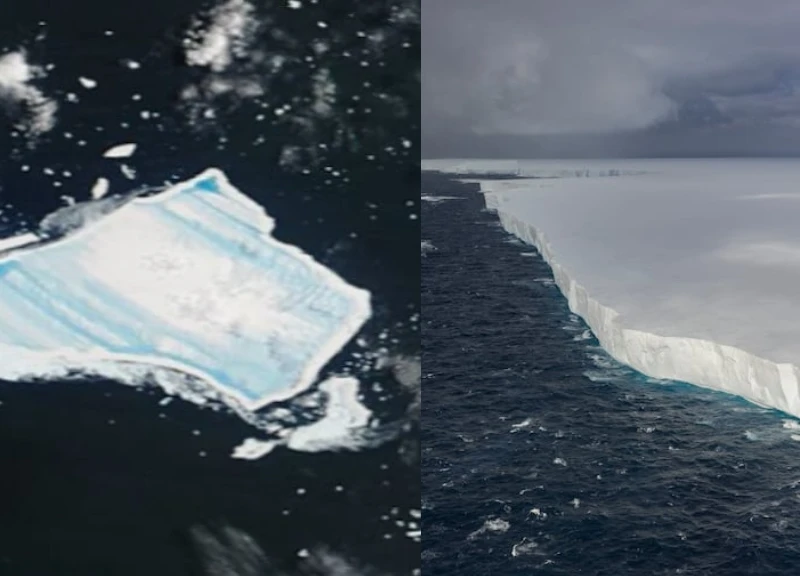
Scientists and the global online community are paying special attention to A-23a – once the largest iceberg on the planet, formed nearly 40 years ago. After breaking away from Antarctica in 1986, A-23a underwent a long and turbulent journey before drifting into the South Atlantic, where it is gradually melting and coming to an end. Despite its impending disappearance, this giant iceberg is strikingly impressive due to its surreal beauty, with prominent blue patterns clearly visible in NASA satellite images.

A-23a was originally part of the Filchner Ice Shelf east of the Antarctic Peninsula, extending toward South America. In 1986, a massive ice sheet, approximately 4,000 km² in size, broke off, forming a table-like iceberg with a flat surface and a size nearly equivalent to the US state of Rhode Island. Its weight is estimated to be over one trillion tons, making it one of the largest icebergs ever recorded.
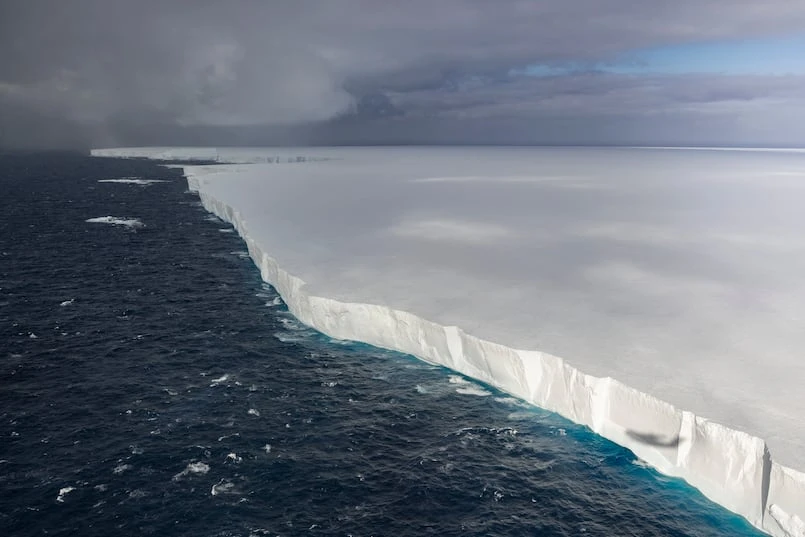
After separating from its Antarctic "home," A-23a didn't immediately drift away. For decades, it remained stranded on the seabed of the Weddell Sea, almost completely frozen in place. It wasn't until 2020 that the iceberg began its journey north, drifting along the Antarctic Peninsula. Along the way, it repeatedly ran aground and then drifted back out to sea. Currently, A-23a is floating near South Georgia Island – an area known as an "iceberg graveyard."
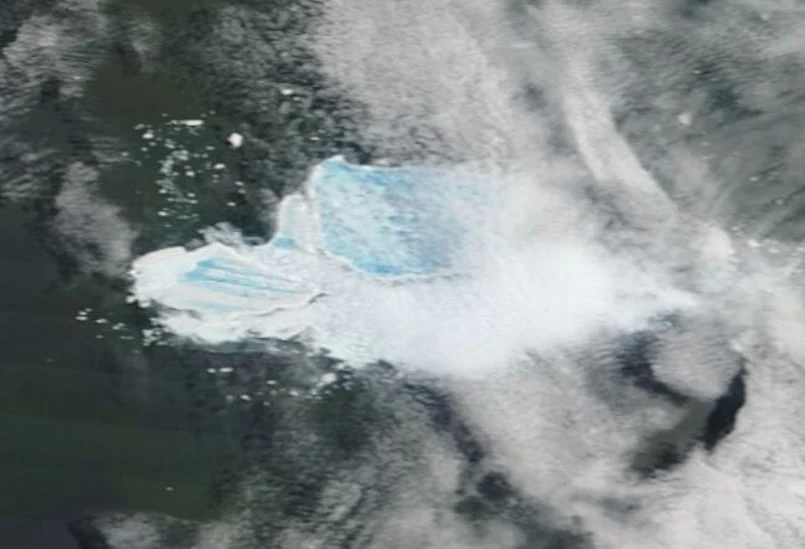
According to the U.S. National Ice Center, as of January 9th, the area of A-23a had shrunk significantly, to only about 781 square kilometers, due to many ice fragments breaking off in warmer waters. Retired scientist Chris Schuman stated that the chances of A-23a surviving the Southern Hemisphere summer are very low. In other words, this once majestic iceberg is in the final days of its life.
What makes A-23a so interesting is not just its size or age, but also its unique appearance. Its surface features vibrant blue streaks, forming artistic, undulating patterns. Ted Scambos, a research scientist at the University of Colorado at Boulder, says these blue areas may be meltwater accumulating in cracks. He explains, "You have the weight of the water in the cracks in the ice, and it's forcing them open."
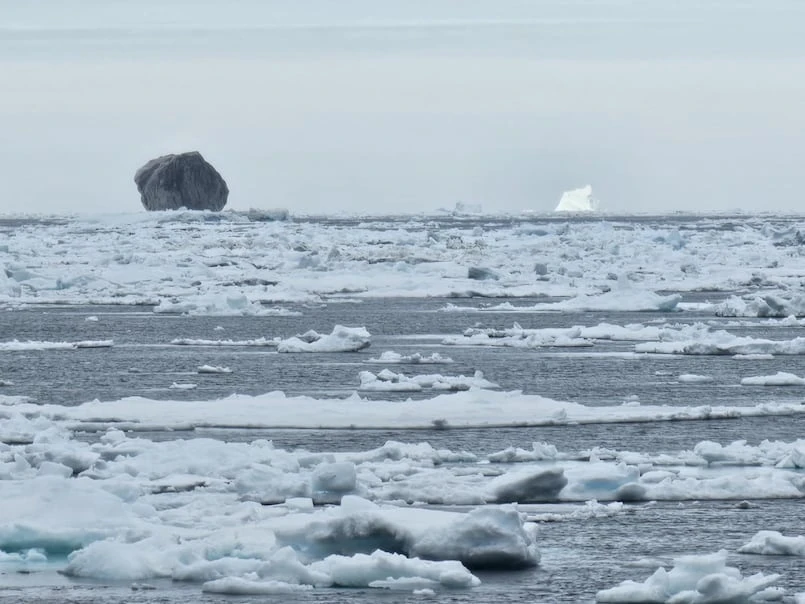
Additionally, Walt Meier from the National Snow and Ice Data Center suggests that the patterns on A-23a resemble parallel grooves, formed over time and serving to "guide the flow of meltwater" across the ice surface. It is this combination of ice structure and meltwater that creates this rare visual effect.
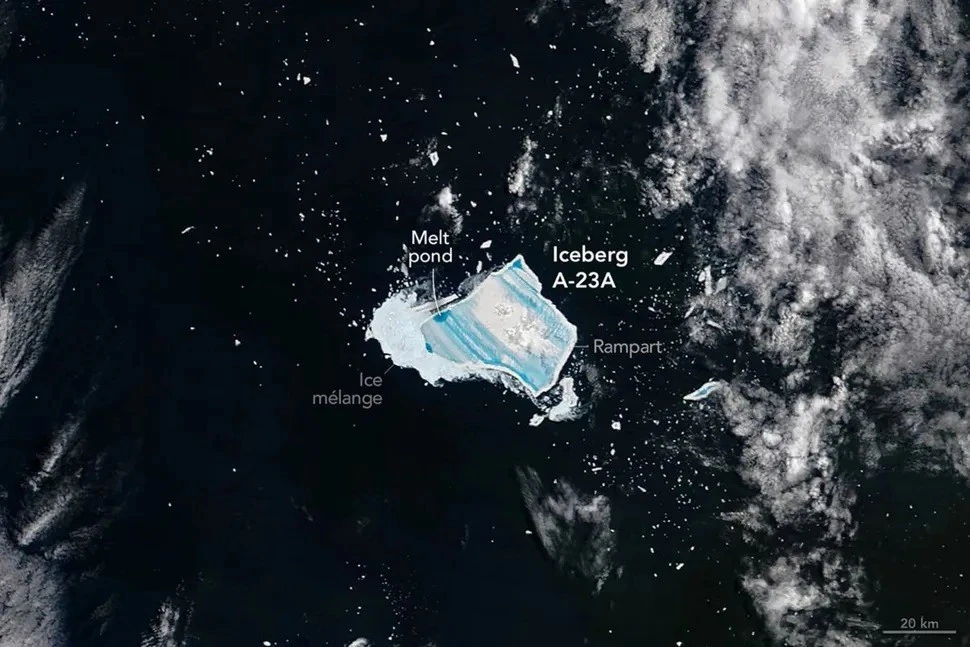
Besides white and blue, many icebergs around the world also exhibit shades of green, yellow, or even black. Scientists say the turquoise color may appear when the ice reflects light from phytoplankton in the seawater.
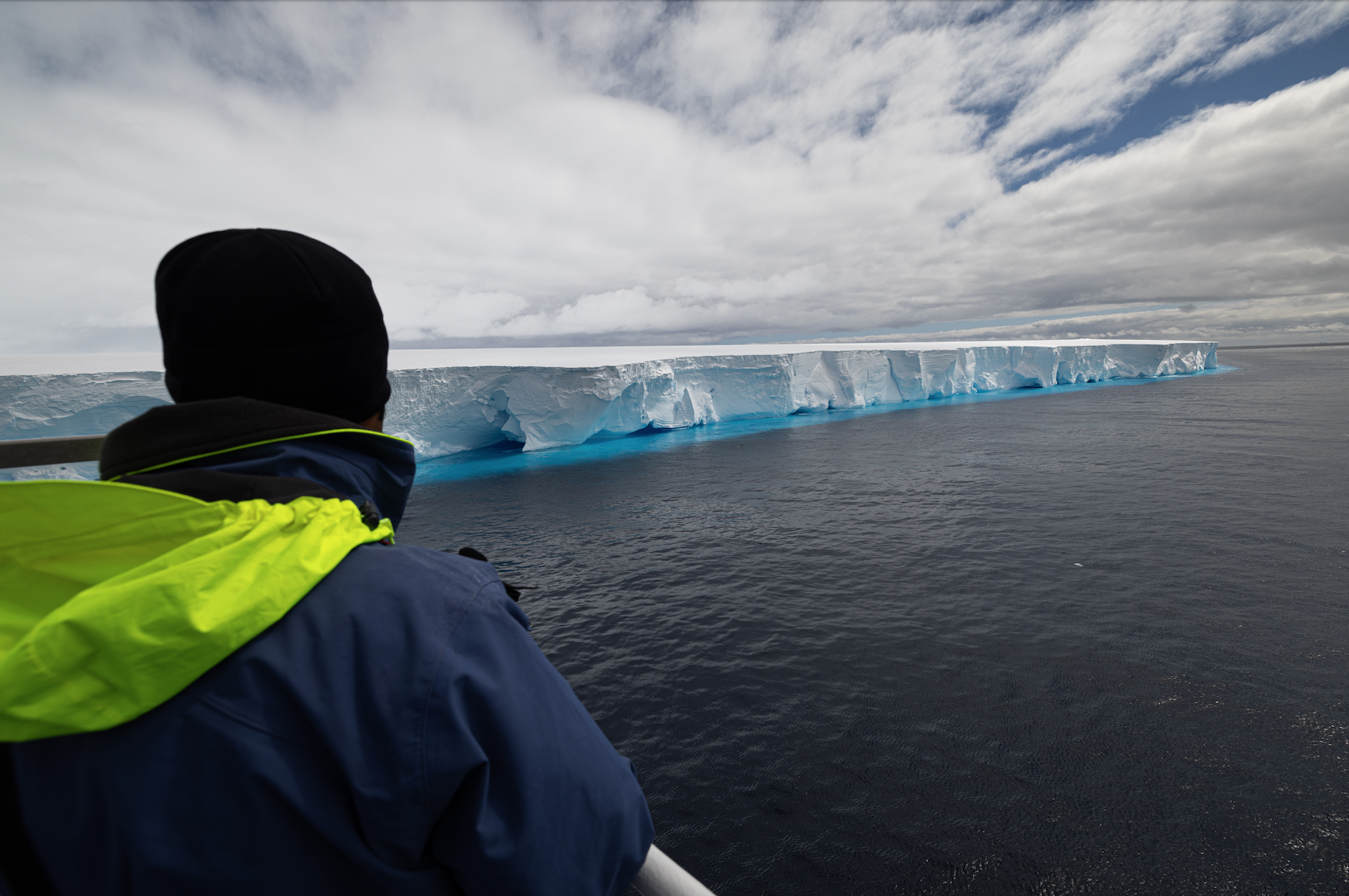
The northward drift of A-23a is a familiar scenario for icebergs. The Weddell Current swirls clockwise, pulling the icebergs away from Antarctica and pushing them into the Scotia Sea and the Drake Passage. A NASA expert commented, "The waters at this latitude are where the fate of icebergs ends." For A-23a, its nearly 40-year journey is nearing its end.
NASA study: Earth darkens, "warning" of worrying energy changes  An chi22:53:33 02/11/2025NASA found that the Earth is darkening in both hemispheres, but the Northern Hemisphere is darkening faster than the Southern Hemisphere, revealing unusual changes in the planet's energy and climate.












 The planet has a massive diamond mine 15km thick, and it takes 5 hours to travel there.
 Unusual situation in Malaysia: Husband openly marries best friend as his second wife, first wife agrees, shocking response.
 What color is the water in the Black Sea? Its name sparks debate worldwide.
 The city with the most names in Vietnam: Originally having 17 different pronunciations, now changed.
 China: Giving away houses and billions of yuan in rewards for having a child – is it true?
 A cat has been appointed station master at a Japanese train station, a mysterious tradition that has lasted nearly 20 years.
 The Mystery of the Nhật Tảo Bell: "National Treasure" and the Story of Vietnamese National History
 Rare photo at the end of the Qing Dynasty reveals a harem far from the movie, a shocking Southern girl
 The only two countries in the world to celebrate Tet 1405 in mid-2026
 UFO crash or strange phenomenon: Decoding a 25-story stone building rising in the middle of a deep forest
 Japan is full of news of the production of 'Doremon's bamboo hurry', the scene of the flying scene is shocking?
 The strict regulations in the Chu Tu Palace since the time of Empress Dowager Tu Xi, everyone was terrified
0 | 0 Discuss | Report