Hidden beneath the 3.7-meter-high wooden pedestal of the statue at But Thap Pagoda, ten Chinese characters carved nearly four centuries ago have revealed the rare identity of the sculptor who created this masterpiece of the Thousand-Handed, Thousand-Eyed Avalokiteshvara Buddha.
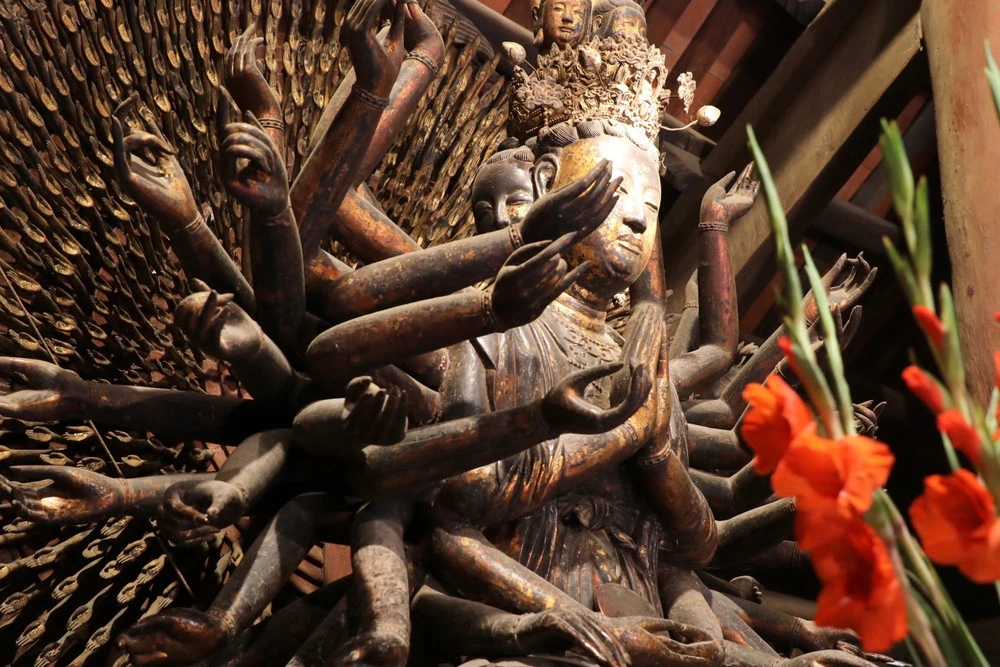
The statue is placed to the left of the Three Worlds Hall in the main hall, measuring 3.7m high, 2.1m wide, and 1.15m thick. The entire structure is made of wood and can be disassembled into 1,080 parts without the need for adhesive. Atop the head of Avalokiteshvara is the image of Amitabha Buddha, recalling the ancient story: when Avalokiteshvara's head exploded into many pieces due to excessive worry for sentient beings, Amitabha Buddha miraculously reassembled them, creating 11 faces and 42 large arms. These bare arms are graceful, as if performing a dance, and extend as if embracing all beings with compassion.
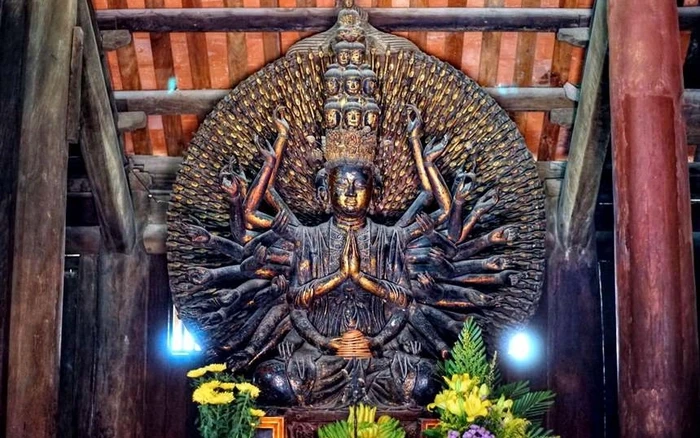
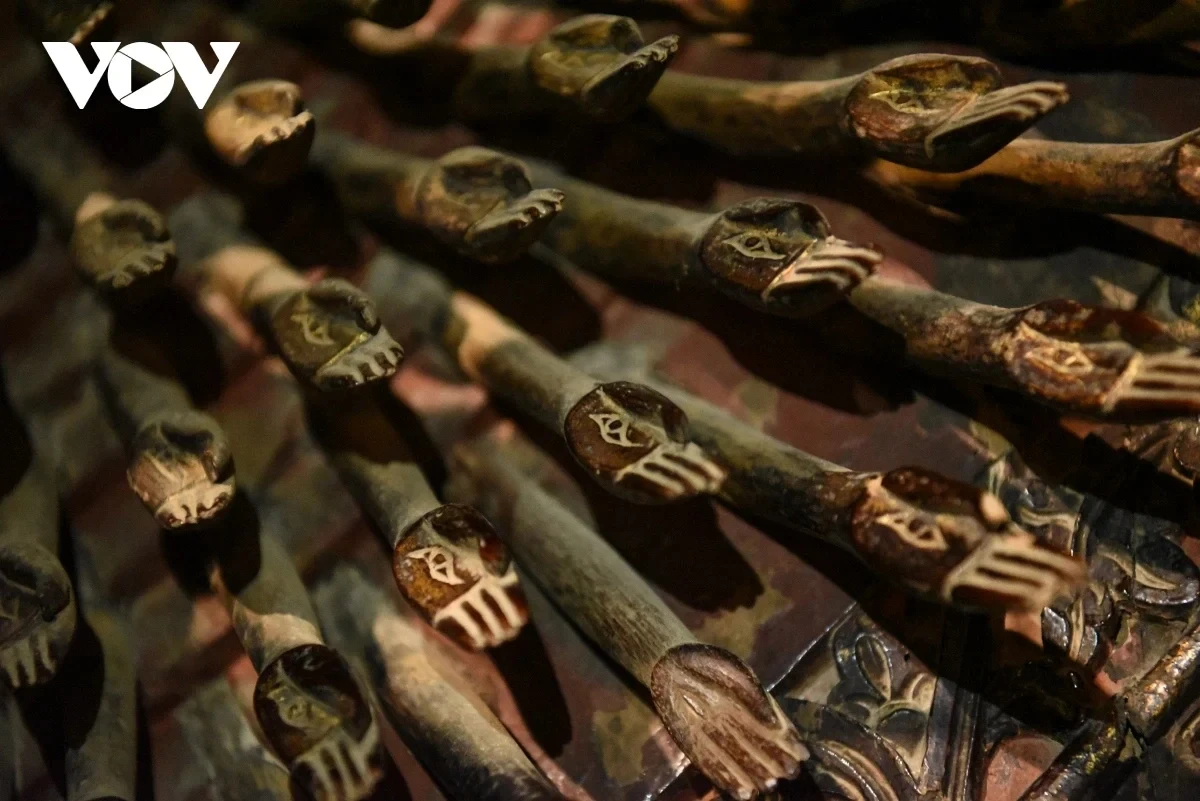
Behind the statue is a large halo, attached to 952 small arms arranged in multiple layers of 6 to 14 rings. In the center of each hand is a long black eye, symbolizing wisdom and the ability to understand the suffering of the world. The statue sits in a serene posture, its monastic robe flowing down to the base, casting a protective shadow over all beings. At its feet is the image of the Dragon King supporting a lotus throne, submissively assisting the Bodhisattva Avalokiteshvara across the sea to save sentient beings.
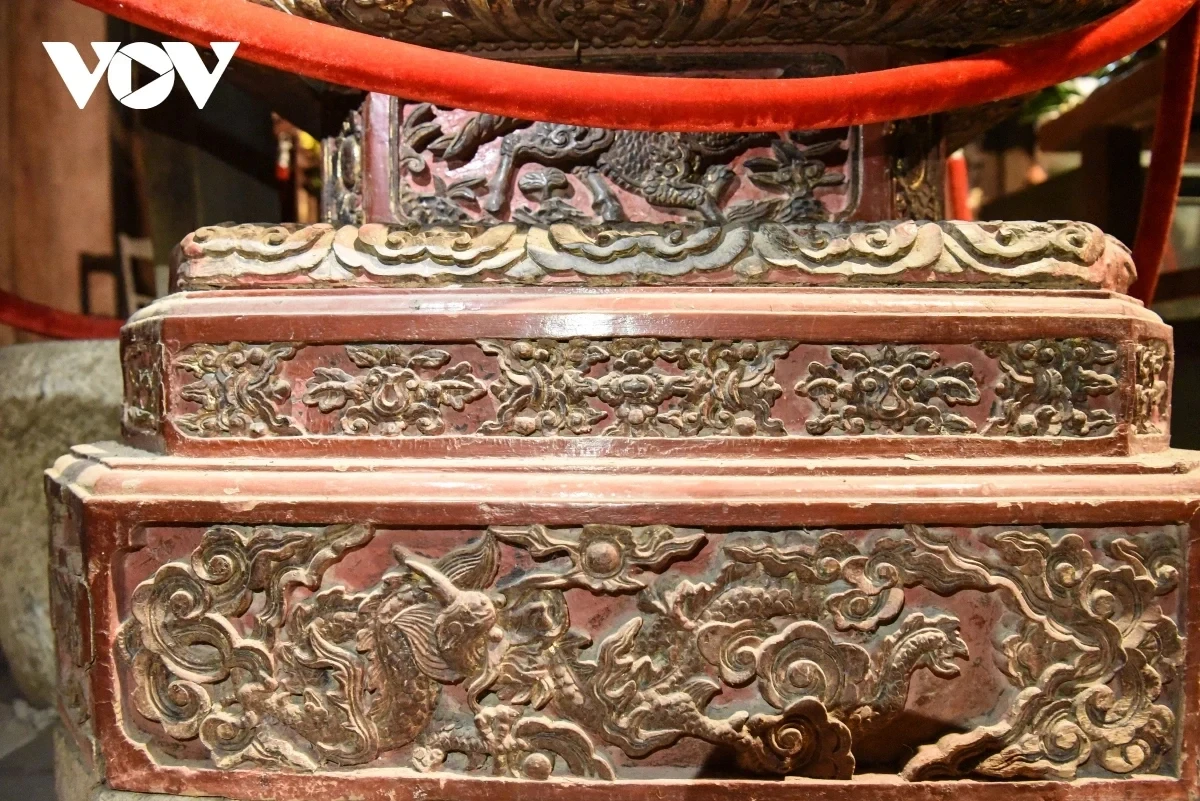
What is particularly noteworthy is the pedestal itself. Beneath the front pedestal is inscribed the words: "Created in the autumn month of the year Bính Thân (1786), on the auspicious day of the lunar calendar"; to the left is written: "Male child, born in the year of the Monkey, reproduced by Mr. Trương." This is an extremely rare case in the tradition of Vietnamese religious statue sculpting, as most ancient statues do not bear the date or name of the artist who created them.
Based on the chronology and inscriptions in the temple, the year Bính Thân is identified as 1656, during the reign of Lê Thần Tông. Thus, the statue was completed on an auspicious autumn day of that year, and its creator was an artisan surnamed Trương, respectfully known as "Mr. Trương." Only those ten engraved characters reveal the identity of the person who created this masterpiece.
The life and career of Mr. Truong remain largely undocumented in historical records. No Han-Nom texts or research works provide further information about him. Only in the Thuan Thanh and Tien Du regions (Bac Ninh province) is there a folk tale about the process of conceiving the statue still passed down.
Legend has it that Empress Trinh Thi Ngoc Truc, a devout Buddhist, had a close relationship with a craftsman named Truong, who at the time owned a large carpentry workshop in Dong Kinh. After several conversations, she sent him gold and silver to fulfill her wish of sculpting a magnificent statue of Quan Am (Guan Yin). However, Mr. Truong suddenly left the workshop and went into seclusion in a deep cave in the Nguyet Hang Son mountain range to contemplate and perfect the sketch.
Nine months later, he appeared, looking haggard but carrying a complete vision of the Thousand-Handed, Thousand-Eyed Goddess of Mercy statue. The Empress was overjoyed and summoned skilled carpenters from all over. Under the direction of Mr. Truong, after nine years of diligent labor and creativity, the statue was completed in the autumn of the year of the Monkey (1786). The inauguration ceremony was witnessed by King Le Than Tong, Lord Trinh Tac, and numerous officials, monks, and nuns. Zen Master Minh Hanh performed the ritual of invoking the spirit into the statue. Folklore says that on that day, the sky was clear and blue, and thousands of stars twinkled in the daytime.
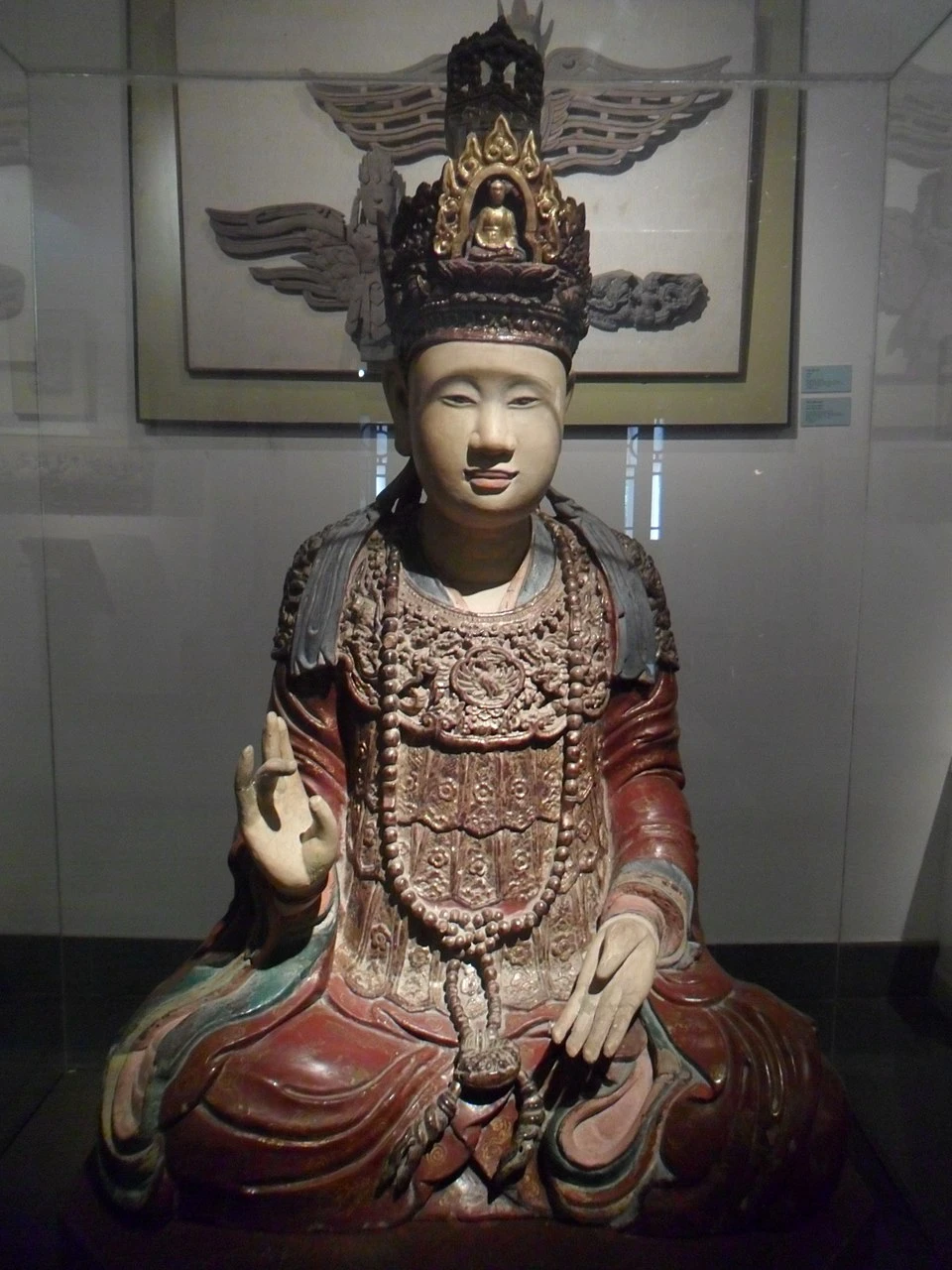
Not only is it a national treasure, the statue is also recognized internationally. At an international sculpture exhibition in India, the statue of Quan Am (Guan Yin) from But Thap Pagoda was awarded a high prize, second only to the Amitabha Buddha statue from India. In 1958, Indian Prime Minister Jawaharlal Nehru, during his visit to Vietnam, also visited But Thap Pagoda and expressed his admiration for this unique architectural and sculptural masterpiece.
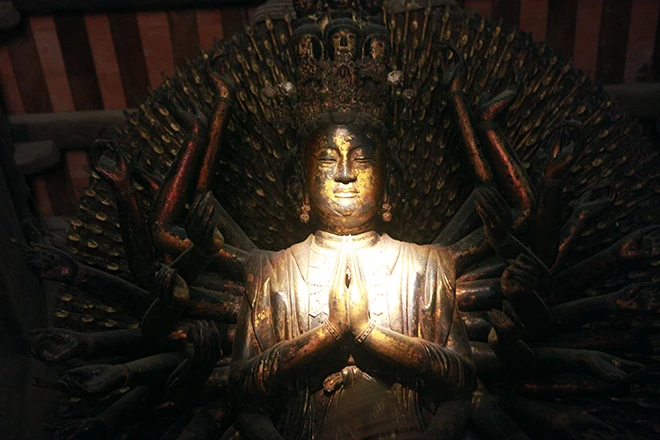
Nearly four centuries have passed, and what is known about Mr. Truong remains confined to ten inscribed characters and oral traditions. Yet, his work has become a source of pride for national sculpture, a heritage of universal value. Continuing to collect and research the life and work of this artist is not only a journey to unravel a historical mystery, but also a fitting tribute to the talent and dedication that created this timeless masterpiece.
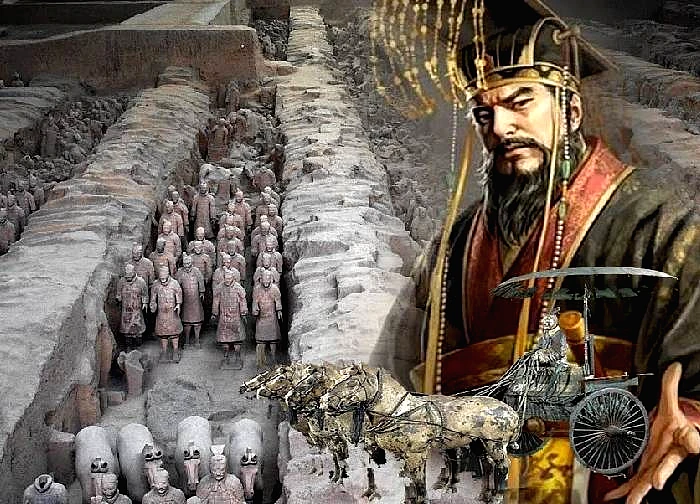
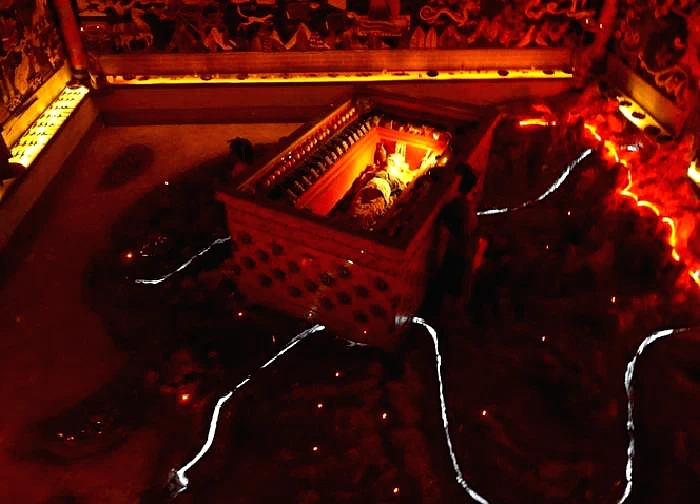
The mystery of Qin Shi Huang's tomb: Experts are terrified and still dare not open it after 2,200 years.  Trần Mạn17:25:48 28/01/2026Considered the most massive tomb complex in China, the reality is that even now, after more than 2,200 years, despite modern equipment and solid knowledge, experts still dare not disturb the resting place of this famous emperor.













 Phong Nha - Ke Bang has just discovered a cave 350m deep with a unique waterfall.
 The bright sky over Hung Yen suddenly darkened in the middle of the day, prompting netizens to stockpile supplies?
 The mystery of cave dragons: can they decompose their own organs to survive for 10 years?
 Hanoi's sky is shrouded in darkness; experts issue warnings about the potential for further heat.
 Strange phenomenon in Thai Nguyen on April 17th: At 7 AM, the sky turned pitch black, causing a stir among locals?
 A species thought to be extinct for 6,000 years has suddenly reappeared in Southeast Asia, causing a stir.
 Experts warn that Earth could exceed its limit by 2027?
 Phi Phong: What are the legends of Northwest Vietnam that are passed down orally, and how scary are they?
 The legend of the three sacred pieces of wood at Mau Vung Temple, a prophetic dream for the childless official.
 The truth behind the strange light streak in Da Nang that caused a stir throughout Central Vietnam: a shocking revelation!
 The mystery of the "dragon head" plot of land in Seoul: The Samsung family has lived there for many years without moving.
 The Orion spacecraft returned safely to Earth, marking a new milestone: 10 days orbiting the Moon.
1 | 0 Discuss | Report