A significant archaeological discovery in the village of Barnham , Suffolk (England), has shaken the scientific community's understanding of human evolutionary history. Experts are now analyzing the documents to uncover more of the truth.
According to Sci-News, excavations here have revealed heated sediment layers dating back 400,000 years, along with a fractured flint axe and two pieces of pyrite – evidence suggesting that ancient humans not only used but also actively created fire much earlier than previously believed.

For decades, the control and creation of fire has been considered a major evolutionary turning point. Fire not only provided warmth, light, and protection from predators, but also opened up the possibility of food processing – which improved nutritional value, expanded the range of edible foods, and contributed to brain development. Actively creating and maintaining fire also allowed humans to survive in harsh climates, thereby expanding their habitats and increasing population sizes.

In archaeological history, traces of fire at human settlements have been identified dating back up to 1 million years. However, the most compelling evidence of the earliest known active fire-making ability dates back only about 50,000 years – to a Neanderthal site in France. Homo sapiens (modern humans) are also thought to have acquired this skill around the same time, or slightly earlier.

But the Barnham discovery has completely changed the issue. Dating back 400,000 years, this new evidence completely refutes the possibility that Homo sapiens was the first to invent fire, since our species only appeared just over 300,000 years ago. The earliest humans to create fire turned out to be early Neanderthals – a branch of the genus Homo that existed alongside us but became extinct about 40,000 years ago.

Among the artifacts found, two fragments of pyrite, a yellowish-metallic iron disulfide mineral, attracted particular attention. Prehistoric people often used pyrite in combination with flint, striking the two materials together to create sparks. What surprised the researchers even more was that pyrite rarely occurs naturally in the Barnham area. The presence of pyrite fragments here led them to believe that this ancient group must have traveled elsewhere to collect them, then carried them as personal belongings during migrations or hunting trips. This suggests that their proactive approach and understanding of firemaking were not simple or accidental.

Professor Chris Stringer , a paleoanthropologist at the Natural History Museum in London (UK) and co-author of the study, stated: "The people who created fire at Barnham 400,000 years ago were probably early Neanderthals, based on the morphology of fossils from the same period from Swanscombe, Kent, and Atapuerca in Spain, which even contain early Neanderthal DNA." This finding opens up a new approach to understanding the intelligence, adaptability, and survival techniques of Neanderthals – which have long been considered less sophisticated than Homo sapiens.

The research was led by Professor Nick Ashton, an archaeologist at the British Museum and the Institute of Archaeology at University College London (UCL). He is also the lead author of the paper published in the prestigious scientific journal Nature, where this discovery is considered a major step forward in understanding the behavior and technical capabilities of ancient human groups.
Mysterious village in Japan: People live with hundreds of creepy dolls  Hải Dương17:17:13 27/10/2025Hidden deep in the Iya Valley on Japan's least populated island of Shikoku, Nagoro village is known worldwide today not for its prosperity or modernity, but for a strange fact: the number of dolls here is 10 times more than the number of real residents.













 Empress Dowager Cixi ate only 20 eggs a day, but the chefs had to cook 500.
 Chinese astronaut nearly 'disappeared' in space, quickly did something to save his life, shocking social media!
 The country "lacks men", opens an hourly "husband hire" service, revealing the reason for TG's shock!
 Why is the year 2026 of the Horse called the year of the "Song of Fire", what to do to avoid bad luck?
 The phenomenon of Ca Mau's "yin and yang" sea causing a stir is actually just a natural law
 Malaysia resumes search for MH370, confirms location where no one expected?
 Ms. Vanga prophesied 2025 shockingly: "Strange light" related to global events?
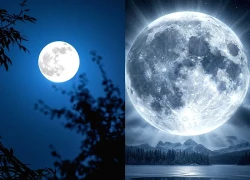 The Cold Super Moon 2025 shines brightly in the sky of Vietnam, closing an impressive year
4 | 0 Discuss | Report