Beneath its dazzling and majestic exterior, the lionfish is silently carrying out a brutal "purge" at the bottom of the ocean. Its terrifying reproduction rate and destructive power have led scientists to propose an unthinkable solution.

Aquarium enthusiasts are no strangers to lionfish, a species with a majestic appearance and wide, fanned fins like a queen. However, few realize that behind that beauty lies a true "killing machine." International public opinion is in an uproar over the news that scientists are being forced to call on the community to join forces to eradicate this species in the most direct way: by putting them on dinner tables. This is no longer just a matter of cuisine, but a battle for survival in marine ecosystems from the Atlantic to the Mediterranean.

Viewers were shocked to learn of the devastating power of this invasive fish species. A single individual can wipe out nearly 80% of the native fish population in a coral reef area in a short period. What angered netizens most was its insatiable appetite, with a stomach capable of expanding up to 30 times its original size. They eat anything that fits in their mouth, from shrimp and crabs to economically valuable fish, driving many native species to extinction.

Many people question why technical measures aren't used to control them. In reality, efforts ranging from using hunting robots to offering thousands-dollar rewards to fishermen are proving futile. Lionfish are not only intelligent but also possess a formidable defense mechanism: venomous spines that deter most natural predators. With the ability to lay up to two million eggs per year, their rate of expansion is so rapid that traditional methods are completely ineffective.

Faced with dire circumstances, the "eat it to kill" approach is becoming a new trend enthusiastically supported by experts. On tourist islands in Greece and in upscale restaurants in the US, lionfish is beginning to appear on menus as a delicacy. Initially, there was considerable apprehension due to the toxins in the fish's spines, but chefs have proven that, with the spines properly removed, the white, tender, and sweet flesh of the lionfish can completely win over even the most discerning diners.
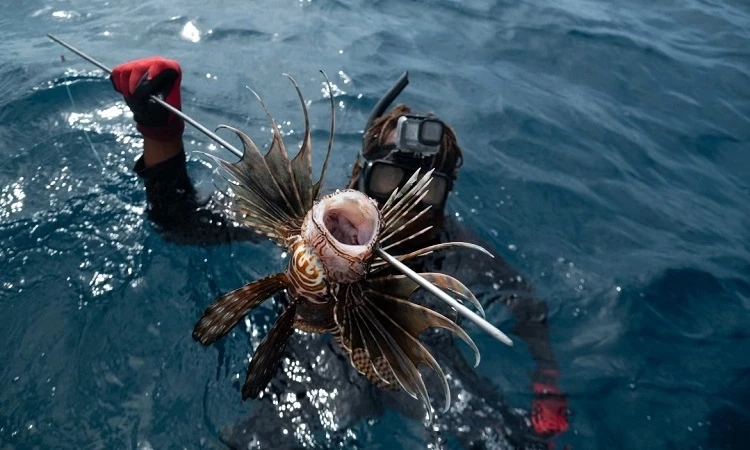
Beyond simply protecting the environment, turning lionfish into a popular dish opens up new avenues for the fisheries industry. At major fish markets, this type of fish is being offered at extremely competitive prices, sometimes only half the price of traditional varieties. Audiences are beginning to shift their perspective, from fear to support, seeing this as a win-win situation: providing a delicious and affordable meal while contributing to the protection of our shared ocean ecosystem.

However, experts also warn that this is a long battle. Changing the eating habits of an entire community is not something that can be done overnight. Nevertheless, with the strong spread of information from the media and the support of famous chefs, hope for a balanced ocean is gradually being rekindled. The invasion of these "thorny beauties" may end not with guns and bullets, but with the very forks on our dinner tables.

















 A wealthy businessman with an incredibly powerful family background is infatuated with a single mother who is one of the most beautiful former Miss Vietnams.
 New developments in the home skin whitening case: Shocking testimony from the female nurse.
 The cause of the train and truck deformed in Hanoi: Camera footage reveals chilling details.
 Shocking clip: Wrestler collapses in the middle of a move, attempts to save him fail.
 Hot girl wrestler knocks out 'Little Devil' Dao Hong Son, reveals her identity, and says something shocking?
 Car found in canal in Gia Lai: Initial cause sparks controversy.
 Outrage over teacher forcing student to lick dirt; Provincial People's Committee intervenes; teacher apologizes.
 American female tourist reacts shockingly to being charged an exorbitant price of 1 million VND for 7km.
 The homeowner was stunned when he visited his housekeeper's home after 10 years, who was supposedly an amazing property.
 Horrifying moment: Passenger bus carrying 32 people loses control and overturns on National Highway 14.
2 | 0 Discuss | Report