An interstellar object that was once suspected to be an astronaut has just been observed by the James Webb telescope. Data shows that it has been drastically altered by cosmic radiation, losing almost all trace of its origin. This phenomenon caused a lot of confusion in the scientific world.

3I/ATLAS, the third interstellar object ever detected by humanity to enter the Solar System, remains a great mystery to scientists. Despite controversial arguments that it is an alien spacecraft, most scientists believe it is just an unusual comet. However, a newly published study has completely overturned initial assumptions, suggesting that the object has been transformed to the point that it is no longer itself after a 7 billion year journey of solitude in the universe.
Confusing strange feature: extreme levels of carbon dioxide enrichment

3I/ATLAS immediately caught the attention of astronomers because it possessed many strange features that puzzled scientists, including extreme carbon dioxide (CO2) enrichment. Normally, comets enrich other compounds as they approach the Sun, but this unusually high level of CO2 has left researchers racking their brains for a solution.

According to a groundbreaking new study, that extraordinary property is due to the fact that 3I/ATLAS absorbed so much cosmic radiation during its roughly 7 billion year lifetime. This is a huge amount of time, showing the silent destruction of the universe on these icy objects.
Lead author Romain Maggiolo from the Royal Belgian Institute of Aeronautics and Astronautics said: "The process is very slow, but it lasts billions of years, so the impact is very strong."
Mutated 20 meters deep: Matter is no longer pristine
Dr. Maggiolo's team carried out detailed calculations and came to a shocking conclusion: the time spent by cosmic radiation was enough to dramatically alter the physical state of the icy object to a depth of about 15-20 meters from the surface.

This means that all of the materials that humanity was able to grasp somewhat from 3I/ATLAS are no longer the pristine chemistry of the place where they formed. Instead, it only reflects the lonely journey and constant torture from cosmic radiation for 7 billion years.

These findings bring about a major change in the study of future interstellar objects. Because, if it has been mutated to that extent, scientists cannot use the current chemical composition to trace the true origin of this alien object.
Close to the mother star: A turning point in the spotlight
The mystery of 3I/ATLAS continued to be pushed into the spotlight when the object flew past perihelion (closest to the Sun) on October 29. Scientists are focusing on finding out how the close encounter of our mother star will cause it to change the structure and composition of the gas released.

Whether or not 3I/ATLAS is an alien spacecraft, its strange properties and profound chemical transformation have opened up a whole new field of research, helping humanity better understand the effects of cosmic radiation on intergalactic objects. This object is a rare opportunity for us to capture a part of the universe beyond the Solar System, even though its material has been deformed over billions of years.
The mystery of the universe's 'cry for help', 'conflicts' between planets, science decodes  Sông Trăng22:49:20 12/05/2025Collisions between giant planets not only leave physical traces but also create seismic waves that last for millions of years, and we can still hear them. Scientists have begun to decode the mysteries of the cry for help from the universe.














 The truth behind the strange light streak in Da Nang that caused a stir throughout Central Vietnam: a shocking revelation!
 The mystery of the "dragon head" plot of land in Seoul: The Samsung family has lived there for many years without moving.
 The Orion spacecraft returned safely to Earth, marking a new milestone: 10 days orbiting the Moon.
 The "superpower" of Vietnamese Zen masters, revealing the classic mysteries that are well hidden
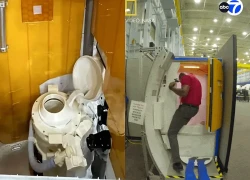 The 800 billion toilet on Artemis II malfunctioned in the middle of the journey, unable to go heavily
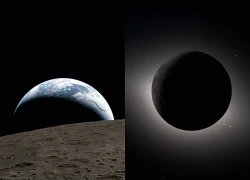 Photo of "Earth sinking" from the Moon takes the internet by storm, NASA reveals an unprecedented perspective
 The mystery of an ancient Chinese village with feng shui architecture, fireproof?
 The "water monster" suddenly rises to the surface of the water, and immediately 'attacks' tourists rowing boats?
 The "chilling truth" if giving birth in space can have "horrifying" consequences?
 Greek skies suddenly 'overcast' the day before Easter, suspected 'miracles' happened?
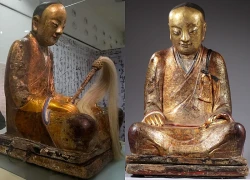 The secret inside the 1,000-year-old Buddha statue contains something that everyone who hears it is afraid of blushing
 The sky of April - May: The grand feast of the light of the Moon, "a few years are once"
4 | 0 Discuss | Report