More than five years have passed since singer Goo Hara left the public eye, but the story surrounding her life, career, and the mysteries surrounding her continues to be discussed as a unique aspect of the Korean entertainment industry.
Not only because she was once a famous idol, a member of the popular girl group KARA, but also because the subsequent prolonged debates went beyond a personal matter, touching on deeper issues of society, law, and how the public treats celebrities.

Goo Hara entered the entertainment industry at a very young age, quickly becoming a familiar face in the second generation of K-pop. With KARA, she made her mark with a series of successful musical releases, not only in South Korea but also in Japan and many other Asian countries. Her image as a beautiful, energetic idol, always radiant on stage, led many to believe that Hara was living the best years of her youth. After KARA established itself, she continued to try her hand at individual activities, from music and television to overseas projects, demonstrating her ambition and efforts to maintain her position in the competitive industry.

However, behind the spotlight lay pressures that not all audiences could see. As a famous artist, Goo Hara faced a demanding work schedule, constant public scrutiny, and strict image standards. The upheavals in her personal life became a topic of discussion, causing her name to appear in the media in unintended ways on numerous occasions. Despite this, the singer strived to maintain a positive public image, repeatedly expressing her desire to continue her artistic career and sending positive energy to her fans.

Goo Hara's death at the end of 2019 shocked the public. South Korean authorities subsequently concluded officially that there were no signs of foul play, and the case was closed based on evidence collected at the scene. However, like many cases involving celebrities, the matter did not end with a legal conclusion. Over time, investigative television programs and in-depth analyses have raised many questions surrounding the singer's final days, from her relationships and daily schedule to seemingly small details of her life.

This information has divided public opinion. Some argue that the conclusions of the authorities and the privacy of the deceased should be respected, avoiding further digging up details that could hurt the family and fans. Meanwhile, many others believe that reviewing the entire context is necessary, not for speculation, but to learn lessons about how society treats artists, especially regarding their mental health and legal protection.
One of the incidents that drew public attention in the years that followed was the break-in at Goo Hara's home, where some personal belongings were stolen. Although the incident occurred after her death and was not directly related to the initial cause of death, it still sparked public outrage. Many argued that even after her passing, the privacy and respect for an artist were not truly guaranteed. Speculations circulating on social media even led to other artists being subjected to unfounded accusations, forcing them to speak out to defend their personal honor.

The debates surrounding Goo Hara's life and death extended beyond the personal to the legal realm, particularly regarding inheritance. Following her passing, the distribution of her assets became a focal point of attention due to disputes among family members. This case quickly garnered widespread public interest, raising questions about the rights and obligations of family members, especially those who were not closely involved or who failed to fulfill their caregiving responsibilities in the past.

From that debate, a proposal to change the law was put forward and gradually gained public support. The new regulation, often referred to by the name associated with Goo Hara, aims to restrict the inheritance rights of relatives who fail to fulfill their obligations to care for and support the deceased. The passage of this law is seen as a significant step forward in the South Korean legal system, not only in relation to Goo Hara's case but also setting a precedent for many similar situations in society.
For many, this is perhaps the most significant social legacy the singer left behind. From a personal story, the debates sparked systemic change, contributing to the protection of the rights of the more vulnerable in families and society. This is also what keeps Goo Hara's name mentioned, not only in the memories of her music fans but also in discussions about law and social ethics.
From a cultural and entertainment perspective, Goo Hara's death has also prompted the industry to re-evaluate itself. Many argue that the pressure on K-pop idols is too great, while the system for psychological and personal support remains limited. Constantly putting artists under scrutiny, coupled with the rapid spread of information on social media, can create long-term consequences that aren't always immediately apparent.

More than five years have passed, yet colleagues and fans still remember Goo Hara with regret. Her songs, images, and memories are still shared as a way of remembering her. For many, Hara was not just an idol who once shone on stage, but also a symbol of the dark side of fame, where glamour and pressure always go hand in hand.
The story of Goo Hara is therefore not simply a remembrance of a deceased artist. It is a reminder of the responsibility of society, the media, and the entertainment industry in protecting the people behind the title of "celebrity." At the same time, the legal changes and the ongoing discussions that followed show that, even in loss, positive values are formed, helping society to reflect and adjust to become more humane.

Goo Hara's legacy, therefore, lies not only in what she performed on stage, but also in the transformations her story brought about. That is why, after many years, Goo Hara's name is still mentioned, not out of curiosity or judgment, but as a shared memory connected to profound reflections on humanity, law, and empathy in modern society.
Rumors are circulating that Hanbin and YuJin will be mentors for the Vietnamese version of the survival show Produce 101?  Bảo Nam10:09:05 30/12/2025According to a news site, the company that is enjoying great success with the Say Hi universe is reportedly planning to acquire the rights to the popular show Produce 101 and is expected to produce the first season in early 2026.












 Jeon Jungkook: From BTS's "Golden Maknae" to the hidden side of the K-pop idol industry.
 Zhao Jinmai: A Gen Z actress with acting prowess in the Chinese entertainment industry, but cursed with being criticized for her romantic drama roles.
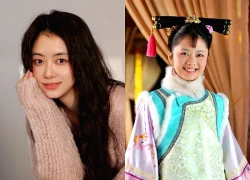 Tan Songyun: From unknown actress to sought-after "youth goddess"
 Li Qin: From Princess Agents to the Chinese "goddess" who caused a sensation across Asia.
 Italy Mora: The 2005 beauty rejected by MU, then becomes a sensation at Miss Cosmo, being called 'Our Lady'!
 Kim Go Eun was criticized for not being worthy of the lead role, but she turned the tables with her outstanding acting.
 Oona Chaplin: The granddaughter of "Charlie Chaplin" creates a sensation with her role in the blockbuster Avatar.
 Son Ye Jin: An icon of Korean cinema, the woman who made Hyun Bin "settle down".
 Sigourney Weaver: Who is the actress in her late 70s who played the sensational character 14 in Avatar?
 Shin Min Ah: From the fox spirit on screen to the icon of a blissful marriage in Korean showbiz.
 Song Joong Ki: His dramatic transformation after marriage to Song Hye Kyo has garnered attention.
0 | 0 Discuss | Report