The king with the most children in Vietnamese history: 142 children, 10,000 people built tombs, compared to Qin Shi Huang?
The Vietnamese history records that a king had up to 142 children and the tomb mobilized more than 10,000 people to build it. That scale makes posterity can't help but associate it with ancient emperors such as Qin Shi Huang. However, the back bears a very unique imprint of the Nguyen dynasty.
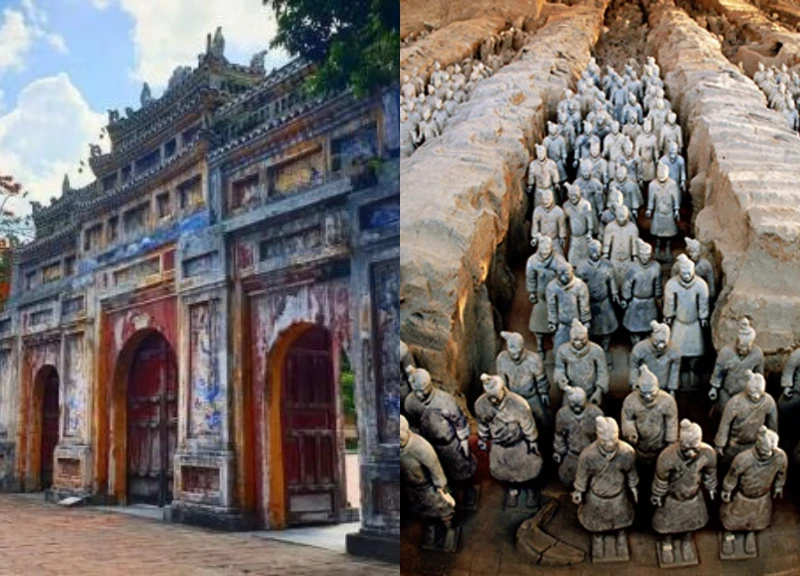
In the history of Vietnamese feudalism, there is rarely a king who has left as many curious marks as King Minh Mang. Not only is he distinguished by his tough ruling mindset and extensive reform system, but the king is also recorded as the person with the highest number of children in Vietnamese history with a total of 142 children. Along with that, his tomb was built by the manpower of more than 10,000 soldiers and craftsmen, making posterity think of famous centralized emperors in Eastern history, including Qin Shi Huang.
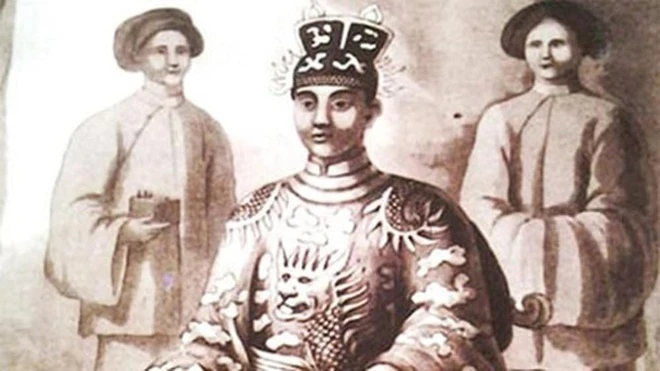
King Minh Mang was born in 1791, named Nguyen Phuc Dam, was the second emperor of the Nguyen Dynasty. He ascended the throne in 1820, succeeded King Gia Long, and reigned for 21 years until his death in 1841. History books record Minh Mang as an intelligent, studious king, who soon revealed his tough and decisive qualities and attached special importance to the discipline of the country. Under him, the administrative apparatus was strictly reorganized, the law was strictly enforced, and many corrupt officials were severely sanctioned, including those with high status in the court.

Along with consolidating state power, the harem life of King Minh Mang also became a special mark in history. According to many official historical sources of the Nguyen Dynasty, the king had more than 40 concubines and gave birth to 142 children, including 78 princes and 64 princesses. This figure clearly reflects the feudal concept of a large number of descendants, ensuring the prosperity and sustainability of the royal family. This is also the reason why Minh Mang is considered the most prolific king in Vietnamese history.

Notably, Minh Mang also left his own mark in naming his children in the royal family. If before, the princess often carried the word "Ngoc" in her name, from a certain time, the king switched to using beauties that show virtue such as Trinh, Doan, and Thuc. This change shows the thinking of educating the royal family according to Confucian standards, valuing etiquette and morality more than form.
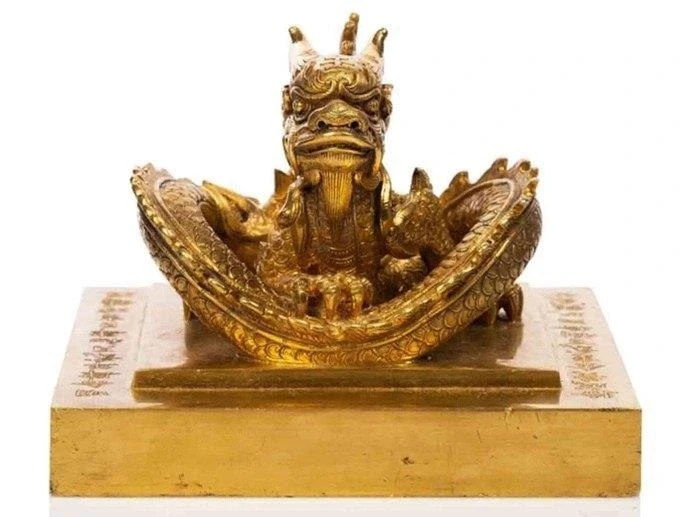
After the death of King Minh Mang, the court under King Thieu Tri initiated the construction of his tomb, called Hieu Lang, now commonly known as Minh Mang Mausoleum. Construction began in 1841 and was completed in 1843, with the participation of more than 10,000 soldiers and craftsmen. In the context of limited construction techniques, the completion of a large-scale mausoleum complex in a short time is what shows the organizational capacity and potential of the Nguyen dynasty at that time.
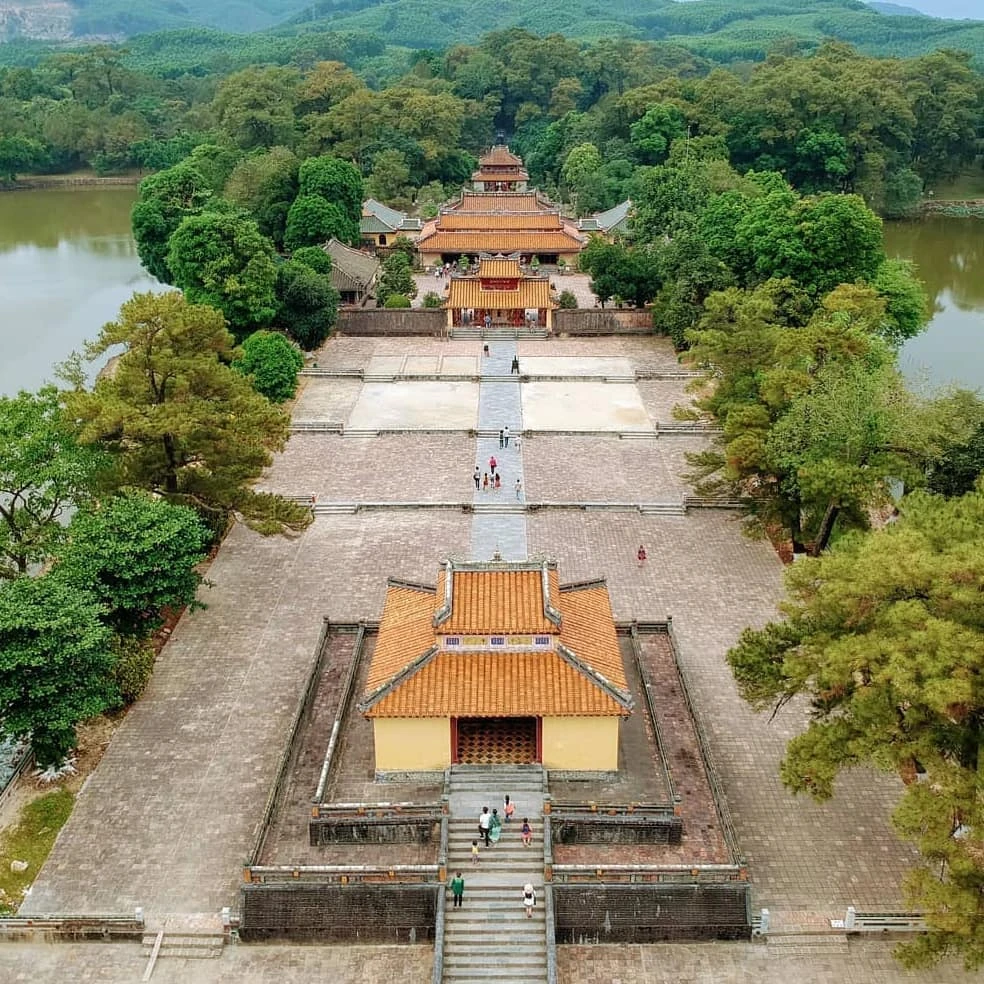
Minh Mang Mausoleum has an area of about 18 hectares, including nearly 40 large and small works, balanced along the Shinto axis more than 700 meters long. The entire space is planned according to the feng shui principle of "pre-water after paint", harmoniously combining mountains, hills, lakes and architecture. In particular, the system of hundreds of crosswords and poetic inscriptions appearing throughout the mausoleum has turned the king's resting place into a space imprinted with Confucian culture and thought.
It is the scale of the tomb and the way the construction is organized that reminds many people of Qin Shi Huang, the first emperor to unify China, famous for its massive tombs and terracotta army. However, researchers believe that this comparison should only stop at the level of similarity in centralized thinking and the use of tomb architecture to assert the emperor's power. If the Mausoleum of Qin Shi Huang bears the imprint of absolute power and the tyranny of the Qin Empire, the Mausoleum of Minh Mang clearly reflects the philosophy of harmony, order and etiquette of Eastern Confucianism.

From a historical perspective, Minh Mang is not only the most numerous king in Vietnamese history, but also one of the emperors who left a deep cultural, administrative and ideological heritage system. Numbers such as the 142 children or more than 10,000 people who built the mausoleum are not only shocking, but also reflect the position and influence of a period when the Nguyen Dynasty reached the peak of power in the nation's history.
How were "spies" in Vietnamese history valued by kings? 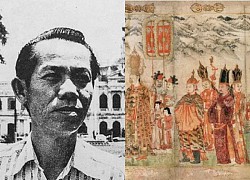 Phi Đức22:26:33 10/01/2024Today, Vietnamese youth, when learning about their country's history, deeply admire the heroes who served as spies in wars. So when did spies exist in Vietnamese history?








New topic
 The legend of the three sacred pieces of wood at Mau Vung Temple, a prophetic dream for the childless official.09:00:29 14/04/2026
 The truth behind the strange light streak in Da Nang that caused a stir throughout Central Vietnam: a shocking revelation!07:41:36 13/04/2026
 The mystery of the "dragon head" plot of land in Seoul: The Samsung family has lived there for many years without moving.09:26:22 12/04/2026
 The Orion spacecraft returned safely to Earth, marking a new milestone: 10 days orbiting the Moon.10:52:48 11/04/2026
 The "superpower" of Vietnamese Zen masters, revealing the classic mysteries that are well hidden10:42:59 10/04/2026
 The 800 billion toilet on Artemis II malfunctioned in the middle of the journey, unable to go heavily16:50:20 09/04/2026
 Photo of "Earth sinking" from the Moon takes the internet by storm, NASA reveals an unprecedented perspective15:43:28 08/04/2026
 The mystery of an ancient Chinese village with feng shui architecture, fireproof?16:51:55 07/04/2026
 The "water monster" suddenly rises to the surface of the water, and immediately 'attacks' tourists rowing boats?09:51:43 06/04/2026
 The "chilling truth" if giving birth in space can have "horrifying" consequences?23:06:04 05/04/2026
 Greek skies suddenly 'overcast' the day before Easter, suspected 'miracles' happened?16:56:44 04/04/2026
 The secret inside the 1,000-year-old Buddha statue contains something that everyone who hears it is afraid of blushing13:36:55 03/04/2026
1 | 0 Discuss | Report